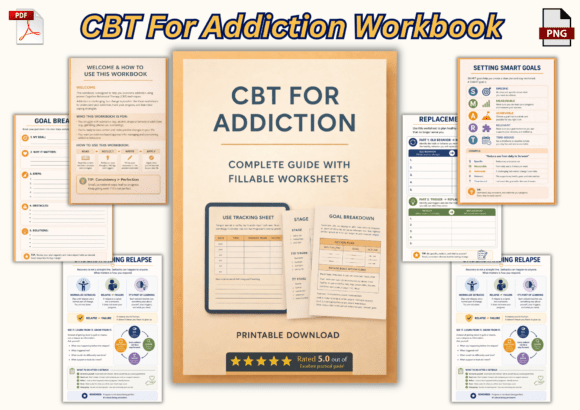
CBT for Addiction Workbook: A Practical Guide to Recovery and Self-Improvement
Cognitive Behavioral Therapy (CBT) has long been recognized as an effective approach for managing addiction, offering individuals the tools to understand and change harmful thought patterns and behaviors. The CBT for Addiction Workbook is a structured, self-help resource designed to support recovery by integrating CBT principles into a 31-page printable format. This workbook provides users with practical worksheets, educational content, and actionable strategies to build awareness, manage cravings, and create sustainable lifestyle changes.
What Makes the CBT for Addiction Workbook Unique?
The CBT for Addiction Workbook stands out due to its focus on accessibility, structure, and integration of evidence-based techniques. Unlike many other resources that may be vague or overly theoretical, this workbook offers clear, step-by-step guidance tailored to the specific challenges of addiction recovery. It includes:
- Addiction education: Helps users understand the psychological and emotional factors behind substance use.
- Thought restructuring exercises: Addresses cognitive distortions that contribute to addictive behaviors.
- Daily tracking sheets and weekly reflections: Encourages accountability and progress monitoring.
- SMART goal-setting systems: Promotes realistic, achievable objectives for recovery.
- Habit replacement planning: Guides users in developing healthier routines and coping mechanisms.
- Relapse prevention tools: Offers strategies to identify triggers and avoid setbacks.
This comprehensive approach makes the workbook suitable for both beginners and those who have already started their recovery journey. Its structured format ensures that users can engage with the material at their own pace while staying motivated and focused on long-term goals.
How Does the CBT for Addiction Workbook Compare to Other Resources?
While there are numerous options available for addiction recovery, such as group therapy, online programs, and traditional books, the CBT for Addiction Workbook offers a unique blend of practicality and personalization. For example:
Compared to Online Programs: While online platforms often provide interactive features and community support, they may lack the tangible, hands-on elements that a physical or printable workbook offers. The CBT for Addiction Workbook allows users to work through exercises offline, making it ideal for those who prefer a more independent and flexible approach.
Compared to Traditional Books: Many books on addiction recovery are informative but may not include the interactive worksheets and structured activities found in the workbook. The CBT for Addiction Workbook combines educational content with actionable tasks, making it easier for users to apply what they learn directly to their lives.
Compared to Group Therapy: Group therapy is invaluable for social support and shared experiences, but it may not be accessible to everyone due to time, location, or cost constraints. The CBT for Addiction Workbook serves as a valuable supplement or alternative, particularly for individuals seeking privacy or flexibility in their recovery process.
Strengths and Limitations of the CBT for Addiction Workbook
The CBT for Addiction Workbook has several strengths that make it a compelling choice for those exploring recovery resources. These include:
- Accessibility: Available in PDF and PNG formats, it can be easily printed or used digitally on tablets or smartphones.
- Structured Approach: The 31-page design ensures that users can follow a logical progression from education to action.
- Self-Paced Learning: Ideal for individuals who prefer to work through recovery materials independently without the pressure of a scheduled session.
- Cost-Effective: Compared to ongoing therapy or subscription-based programs, the workbook represents a one-time investment.
However, it's important to consider potential limitations. The workbook is not a substitute for professional medical or psychological care. Individuals with severe addiction issues may benefit from combining the workbook with therapy or support groups. Additionally, the effectiveness of the workbook depends on the user's commitment to completing the exercises and applying the techniques consistently.
When Is the CBT for Addiction Workbook the Right Choice?
The CBT for Addiction Workbook may be especially beneficial for individuals who are:
- Early in their recovery journey: Those who are just beginning to explore recovery options may find the workbook helpful in building foundational knowledge and skills.
- Looking for a structured yet flexible resource: The workbook’s organized layout makes it easy to follow, while the printable format allows users to engage with the material at their own pace.
- Interested in self-directed learning: People who prefer to take control of their recovery without relying on external support systems may find the workbook empowering.
- Seeking cost-effective alternatives: For those who cannot afford regular therapy sessions or online programs, the workbook offers an affordable option for continued growth and reflection.
On the other hand, if someone requires more intensive support, such as medication management or access to a therapist, the workbook should be used in conjunction with professional care rather than as a standalone solution.
Practical Examples and Use Cases
Let’s consider a few scenarios where the CBT for Addiction Workbook could be useful:
Example 1: Sarah, a 35-year-old mother, has been sober for six months but struggles with occasional cravings. She finds the daily tracking sheets and craving management exercises in the workbook helpful in identifying her triggers and developing new coping strategies.
Example 2: Mark, a 42-year-old recovering alcoholic, uses the SMART goal-setting system to create a plan for rebuilding his life after addiction. He tracks his progress using the monthly habit streaks and weekly reflection pages, which help him stay motivated and focused on his long-term goals.
Example 3: Emily, a 28-year-old college student, prefers to work through recovery materials on her own. She appreciates the flexibility of the workbook’s digital format and the ability to print pages as needed for journaling and self-reflection.
These examples illustrate how the workbook can be adapted to different needs and situations, making it a versatile tool for various stages of recovery.
Final Thoughts
The CBT for Addiction Workbook is a valuable resource for individuals seeking to apply Cognitive Behavioral Therapy principles to their recovery journey. With its structured approach, practical worksheets, and focus on self-improvement, it offers a comprehensive way to build awareness, manage cravings, and create lasting change. While it may not replace professional treatment, it can serve as a powerful complement to other recovery methods. By evaluating individual needs, preferences, and goals, readers can determine whether this workbook aligns with their path to healing and personal growth.