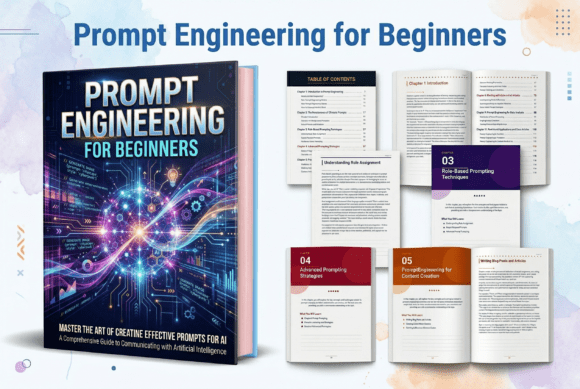
Prompt Engineering for Beginners: Master the Art of AI Communication
In today's rapidly evolving digital landscape, artificial intelligence (AI) has become an indispensable tool across various industries. From customer service to content creation, AI-powered platforms like ChatGPT, Claude, and Midjourney are reshaping how we interact with technology. However, to fully leverage these tools, one must understand the art of Prompt Engineering for Beginners. This comprehensive guide is designed to help you unlock the full potential of AI by mastering the essential language that bridges human intent and machine execution.
Prompt Engineering for Beginners refers to the practice of crafting precise and effective instructions for AI models to generate high-quality outputs. Whether you're a student, professional, or hobbyist, this resource equips you with the knowledge and skills needed to communicate effectively with AI systems. By learning how to structure your prompts correctly, you can enhance productivity, creativity, and problem-solving capabilities in your daily work and projects.
The Power of the Prompt
At the heart of Prompt Engineering for Beginners lies the understanding of how Large Language Models (LLMs) interpret instructions. LLMs rely on the clarity and specificity of the prompts they receive to produce accurate and relevant responses. A well-crafted prompt not only guides the AI in the right direction but also minimizes errors such as hallucinations or irrelevant results.
Consider a simple example: if you ask an AI to "write an article about climate change," it may generate a generic piece without depth. However, by refining your prompt to "write a detailed article about climate change, including recent statistics, expert opinions, and actionable solutions," you provide the AI with clear guidelines to produce a more comprehensive and insightful response.
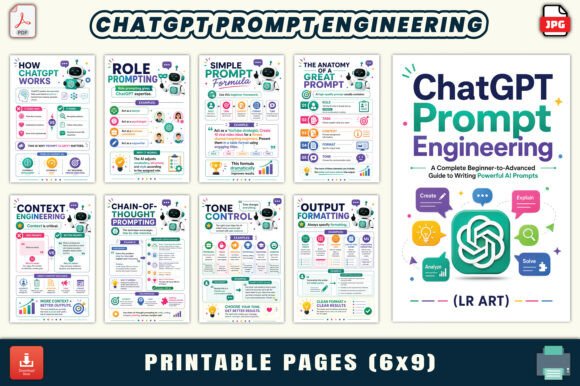
The Anatomy of a Great Prompt
Crafting an effective prompt involves several key components: context, task, constraints, and personas. Each element plays a crucial role in ensuring that the AI delivers the desired output.
- Context: Providing background information helps the AI understand the situation better. For instance, specifying that you need a marketing strategy for a tech startup gives the AI a clearer picture of the target audience and industry.
- Task: Clearly stating what needs to be done is essential. Instead of saying "help me with my project," be specific: "create a 10-page business plan for a new e-commerce venture."
- Constraints: Setting boundaries ensures that the AI stays within the required parameters. You might include constraints such as "use only English" or "avoid technical jargon."
- Personas: Assigning a persona to the AI can lead to more tailored responses. For example, asking the AI to act as a marketing expert or a software developer can yield insights that are more aligned with the expertise of that role.
By incorporating these elements into your prompts, you significantly increase the chances of receiving high-quality outputs that meet your specific needs.
Common Mistakes to Avoid
While Prompt Engineering for Beginners offers numerous benefits, there are common pitfalls that can hinder your success. One of the most frequent mistakes is using vague or overly broad prompts. Instead of asking for general advice, focus on specific requests that outline exactly what you want from the AI.
Another mistake is neglecting to provide sufficient context. Without adequate background information, the AI may struggle to understand the nuances of your request, leading to irrelevant or inaccurate responses. It's also important to avoid ambiguous constraints, which can confuse the AI and result in suboptimal outcomes.
To overcome these challenges, take the time to refine your prompts and ensure they are clear, concise, and well-structured. Experiment with different phrasings and observe how each variation affects the AI's output. Over time, you'll develop an intuitive sense of what works best for your specific use cases.
Advanced Techniques in Prompt Engineering
Once you've mastered the fundamentals of Prompt Engineering for Beginners, you can explore advanced techniques that further enhance your ability to communicate with AI. One such technique is Role-Based Prompting, where you assign specific roles to the AI to elicit expert-level advice in areas such as marketing, coding, or education. By instructing the AI to act as a seasoned marketer or a proficient coder, you can gain insights that are more aligned with industry standards and best practices.
Another powerful method is Chain-of-Thought Prompting, which encourages the AI to think through complex problems step-by-step. This approach is particularly useful when dealing with multifaceted tasks that require logical reasoning and strategic planning. By breaking down the problem into smaller, manageable parts, you enable the AI to generate more coherent and structured responses.
These advanced techniques allow you to push the boundaries of what's possible with AI, transforming it from a mere tool into a valuable collaborator in your creative and analytical endeavors.
Practical Applications and Outcomes
The applications of Prompt Engineering for Beginners are vast and varied, spanning multiple domains. In the realm of content creation, for example, you can use AI to generate blog posts, social media updates, and even scripts for videos. By crafting precise prompts, you can ensure that the generated content aligns with your brand voice and messaging strategies.
In the field of education, Prompt Engineering for Beginners can be used to create personalized learning experiences for students. Teachers can design prompts that cater to individual learning styles and paces, enabling students to grasp complex concepts at their own speed. Similarly, professionals can leverage AI to streamline workflows, automate repetitive tasks, and focus on higher-value activities that drive innovation and growth.
Regardless of your background or interests, Prompt Engineering for Beginners offers a pathway to harness the power of AI in meaningful ways. Whether you're looking to enhance your productivity, expand your creative horizons, or solve complex problems, mastering the art of prompt engineering will empower you to achieve your goals more effectively.
As you embark on your journey with Prompt Engineering for Beginners, remember that practice makes perfect. Experiment with different prompts, learn from your successes and failures, and continually refine your approach. With dedication and persistence, you'll soon find yourself communicating seamlessly with AI, unlocking new possibilities and achieving remarkable outcomes along the way.