Restorative Justice Workbook: A Tool for Teaching Empathy and Conflict Resolution in Children
The Restorative Justice Workbook is an innovative educational resource designed to help children ages 5–12 develop essential social-emotional learning (SEL) skills. This workbook focuses on teaching empathy, emotional awareness, respectful communication, and healthy conflict resolution through a variety of engaging activities. It is a valuable tool for educators, parents, counselors, and other professionals who want to support the emotional and behavioral growth of children.
What is Restorative Justice?
Restorative justice is an approach that emphasizes healing, accountability, and relationship-building over punishment. It seeks to address the harm caused by wrongdoing and restore relationships between individuals. In the context of children, restorative justice can be used to teach them how to understand their actions, take responsibility, and repair relationships in a constructive way.
The Restorative Justice Workbook introduces these concepts in a child-friendly format, making it easier for young learners to grasp complex ideas about empathy, accountability, and respect.
Key Features of the Restorative Justice Workbook
The Restorative Justice Workbook is packed with a wide range of activities and exercises that promote emotional intelligence and positive behavior. Some of the key features include:
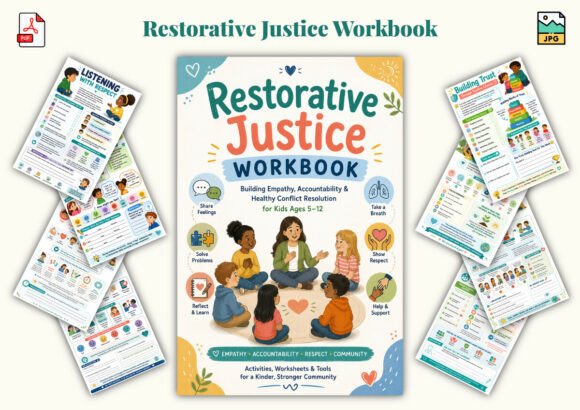
- 31 Professionally Designed Pages: Each page is carefully crafted to engage children and encourage reflection and learning.
- High-Quality JPG Files and Print-Ready PDF: The workbook is available in both digital and printable formats, making it easy to use in various settings.
- Kid-Friendly Layouts: The clean, modern design ensures that children can easily navigate the content without feeling overwhelmed.
- SEL Activities and Reflection Exercises: These activities are designed to help children explore their emotions, think critically, and build empathy.
- Communication Practice Pages: These pages provide opportunities for children to practice expressing themselves respectfully and listening actively.
- Calming Strategies and Kindness Activities: These exercises help children manage their emotions and build positive relationships with others.
Whether you're a teacher, parent, or counselor, the Restorative Justice Workbook offers a comprehensive set of tools that can be used to support children's emotional development and social skills.
Who Can Benefit from the Restorative Justice Workbook?
The Restorative Justice Workbook is suitable for a wide range of users, including:
- Teachers: Use the workbook as part of SEL lessons or classroom activities to help students develop important life skills.
- School Counselors: Incorporate the workbook into counseling sessions to support students dealing with social or emotional challenges.
- Parents: Use the workbook at home to teach your child about empathy, emotional regulation, and conflict resolution.
- Therapists and Social Workers: Utilize the workbook as a therapeutic tool to help children process their experiences and build healthier relationships.
- Homeschool Educators: Integrate the workbook into your homeschool curriculum to support your child's social-emotional development.
Its versatility makes the Restorative Justice Workbook a valuable resource for anyone working with children in educational or therapeutic settings.
Real-World Applications of the Restorative Justice Workbook
The Restorative Justice Workbook can be used in a variety of real-world scenarios to support children's emotional and social growth. For example:
- In the Classroom: Teachers can use the workbook to facilitate group discussions, role-playing exercises, and reflective writing prompts that help students understand different perspectives and resolve conflicts peacefully.
- In Counseling Sessions: Counselors can use the workbook to guide children through self-reflection, emotional regulation, and relationship-building exercises.
- At Home: Parents can use the workbook to help their children express their feelings, practice active listening, and learn how to apologize and make amends when they've hurt someone.
These practical applications demonstrate the effectiveness of the Restorative Justice Workbook in helping children develop essential life skills.
Strengths and Considerations
The Restorative Justice Workbook has several strengths that make it a valuable resource for educators and parents. Its engaging activities, clear instructions, and child-friendly design make it accessible and enjoyable for young learners. Additionally, the workbook's focus on restorative justice principles helps children develop a deeper understanding of empathy, accountability, and respect.
However, there are also some considerations to keep in mind. While the workbook provides a solid foundation for teaching restorative justice concepts, it may not be sufficient for children with more complex emotional or behavioral needs. In such cases, it may be beneficial to combine the workbook with additional resources or professional guidance.
Evaluating the Suitability of the Restorative Justice Workbook
When evaluating whether the Restorative Justice Workbook is suitable for your needs, consider the following factors:
- Age Appropriateness: The workbook is designed for children ages 5–12, so it's important to ensure that the content is appropriate for your child's developmental stage.
- Learning Objectives: Determine whether the workbook aligns with your educational goals and the specific skills you want to teach your child.
- Engagement Level: Choose a workbook that is visually appealing and engaging for your child to ensure that they remain interested and motivated.
- Support Resources: If you're using the workbook in a professional setting, consider whether additional training or resources will be needed to implement it effectively.
By carefully considering these factors, you can determine whether the Restorative Justice Workbook is the right choice for your child or students.
Conclusion
The Restorative Justice Workbook is a powerful tool for teaching children essential social-emotional skills such as empathy, emotional awareness, respectful communication, and conflict resolution. Its engaging activities, clear instructions, and child-friendly design make it an ideal resource for teachers, parents, counselors, and other professionals working with children. Whether used in the classroom, counseling sessions, or at home, the Restorative Justice Workbook can help children develop the skills they need to build healthy relationships and navigate challenges with confidence.